
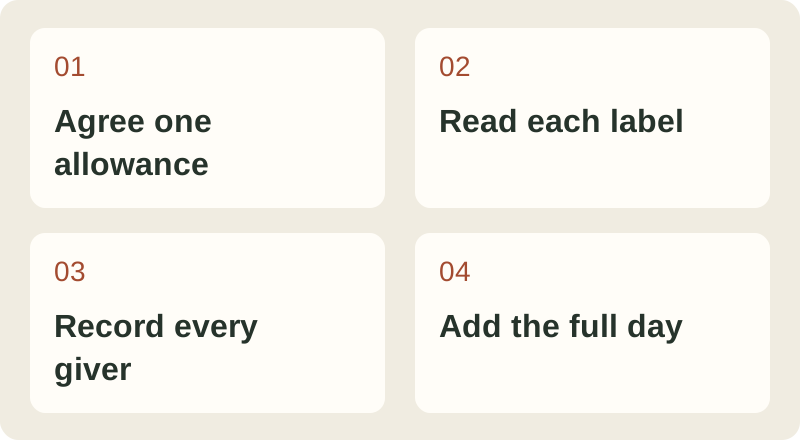
A few treats from each person can become a substantial extra meal when nobody adds them together. Start with one household allowance that includes training rewards, toppers and edible chews.
The 10% figure is a ceiling, not a target
WSAVA’s dog-treat guidance recommends no more than 10% of daily calories from treats and notes that conventional treats may be inappropriate for some medical conditions or prescribed diets. A veterinary plan can require a lower amount or different choices. Read the WSAVA handout.
“Under 10%” does not establish that an ingredient is safe or that a diet is nutritionally balanced. Suitability and quantity are separate checks. This article’s worked example is for a hypothetical dog; it is not an individual feeding recommendation.
One bowl of rewards for one day
Suppose a dog’s agreed daily target is 500 kcal. The general maximum would be 50 kcal from treats. If an edible chew already contributes 30 kcal, only 20 kcal remains for other extras. Two family members cannot each add another 50 kcal while calling it a small allowance.
Put the permitted daily quantity in one labelled container, or maintain a shared written total when items cannot be pre-portioned. Everyone takes from the same allowance. Record items used for giving medication too, and check their suitability with the clinic if a prescribed diet is involved.
Read the unit beside the number
“12 calories” could mean per piece, per serving or per a stated weight. Write down the exact unit. If one serving contains three pieces and is 12 kcal, each equal piece is approximately 4 kcal; giving three separate 12-kcal servings is a different amount. When the label is unclear, ask the manufacturer rather than estimating from the size of the treat.
| Extra | Actual label unit | Amount given | Calories |
|---|---|---|---|
| Training rewards | kcal per piece | Count the pieces | Pieces × kcal/piece |
| Topper | kcal per 100 g | Weigh grams | Grams × kcal/100 g ÷ 100 |
| Edible chew | kcal per chew | Record the actual item | Use the manufacturer’s value |
Subtract extras before planning main food
With a 500-kcal total and 50 kcal of suitable extras, the main-food allowance is 450 kcal. Adding the extras on top of a full 500-kcal ration would make 550 kcal. Keep the daily total visible and review the arrangement when routines or products change.
Record the household’s combined extra calories on the free shared treat sheet below. PawKnow Kitchen keeps two tasks separate: cooked-food preparation for suitable healthy adult dogs, and meal-by-meal organisation of an already agreed prescribed plan. Log treats and toppers separately; the tool does not approve them for a medical diet or add them to an existing plan. For a reusable household record, see the 21-Day Feeding Reset PDF.
Sources checked September 25, 2026. Example values are hypothetical. Follow your pet’s individual veterinary advice.
Make the shared total visible
Keep using the hypothetical dog with a 500-kcal daily target and a maximum 50-kcal allowance. A 30-kcal chew leaves 20 kcal. If one family member gives two 4-kcal rewards and another weighs 10 g of a topper labelled 120 kcal per 100 g, that adds 8 + 12 kcal. The whole allowance is now used: 30 + 8 + 12 = 50 kcal. The main-food plan remains 450 kcal for this example. The figures are invented; use only suitable foods and your own pet’s agreed limits.
| What was given | Amount | kcal | Remaining |
|---|---|---|---|
| Edible chew | 1 item | 30 | 20 |
| Training rewards | 2 × 4 kcal | 8 | 12 |
| Topper | 10 g at 120 kcal/100 g | 12 | 0 |
Write an entry when food is given, not only at the end of the day. For a shared home, a fridge sheet can avoid two people both assuming the other has not fed a reward. The record is an organizational aid, not proof that a particular treat is safe.
What if the label or the record is incomplete?
- No calorie value: note the exact product and amount, and ask the manufacturer for the value. Leave the total marked incomplete instead of entering zero.
- Food taken from the main ration: record where that portion came from so it is not served again at dinner.
- An extra item was already given: record it honestly. Do not invent a remaining allowance or abruptly skip meals to compensate; ask the veterinary team how to handle a prescribed plan.
Download the free shared treat record (English + 中文, 2-page printable PDF). It provides space for the giver, item, label unit, quantity and running total. For mixed meals, continue with the wet-and-dry calorie example.
Examples, source links and current tool descriptions reviewed September 30, 2026. Existing worksheets and illustrations prepared September 15, 2026.