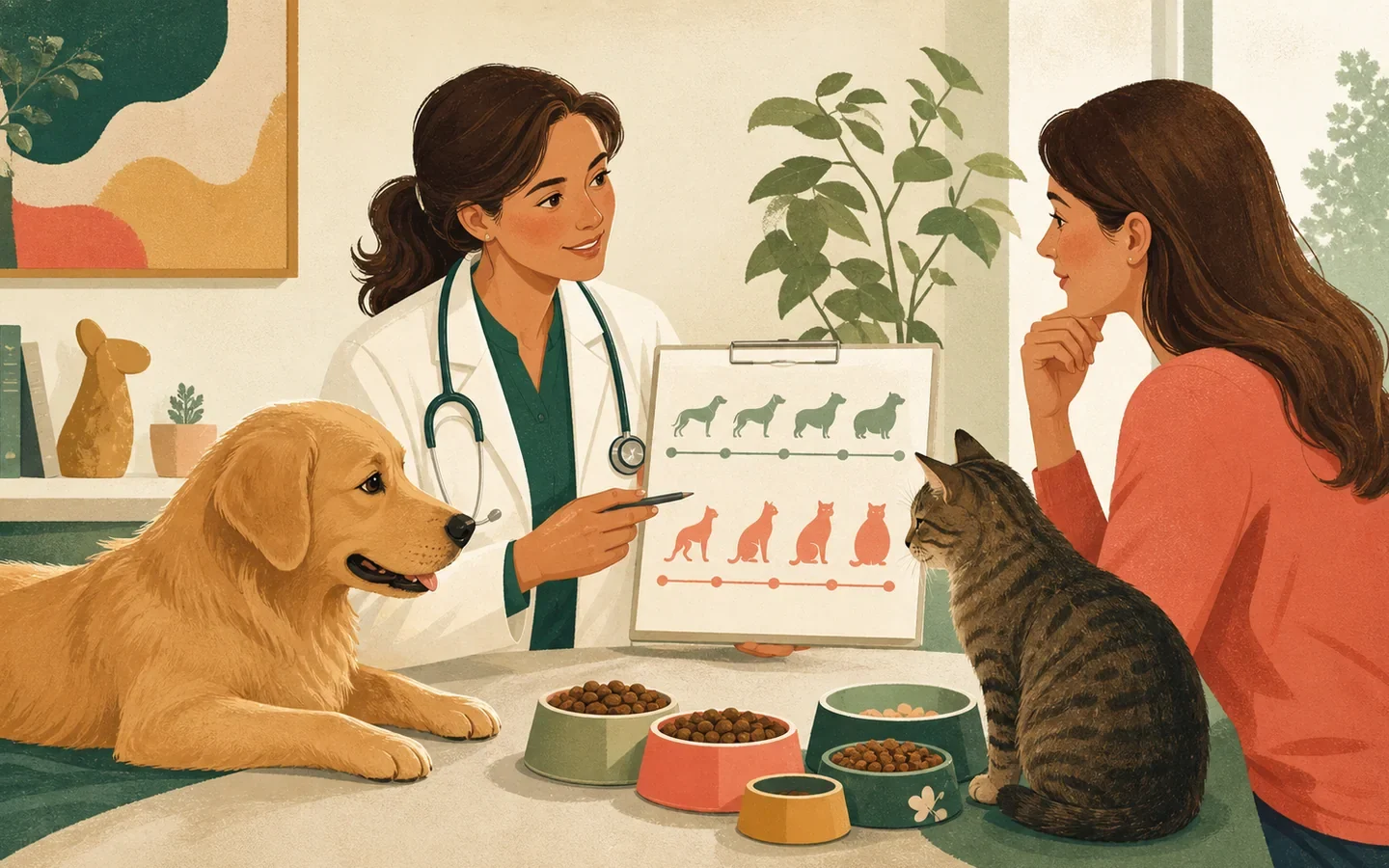
When my cat was diagnosed with chronic kidney disease (CKD) at age 12, the veterinarian recommended a prescription renal diet. I looked at the price—$65 for a 6-pound bag, compared to $35 for the premium kibble I’d been feeding—and I was skeptical. Was this really necessary, or was the vet just pushing expensive products? I spent the next week reading veterinary journals, nutrition textbooks, and clinical studies. The answer was clear: prescription diets are not a marketing scheme. They are medically formulated interventions that can extend life and improve quality of life. But they’re not always necessary, and understanding when they are—and when they aren’t—is critical.
What Makes a Prescription Diet Different
Prescription diets (also called therapeutic diets or veterinary diets) are formulated for specific medical conditions and are sold only through veterinarians. They are not just premium versions of regular pet food. They are nutritionally engineered to address specific disease mechanisms. For example, a renal diet for cats with CKD is restricted in phosphorus (to slow kidney damage) and protein (to reduce nitrogenous waste), while being supplemented with omega-3 fatty acids (to reduce inflammation) and potassium (to correct electrolyte imbalances).
These formulations are based on decades of clinical research. The Royal Canin Renal Support diet, for example, has been studied in multiple peer-reviewed trials. A 2022 study in the Journal of Veterinary Internal Medicine found that cats with CKD fed a prescription renal diet lived an average of 2.3 years longer than cats fed a maintenance diet. The difference is not marginal—it’s transformative. But this benefit is specific to CKD. A healthy cat fed a renal diet would develop protein deficiency and muscle wasting. Prescription diets are medicine, not food.
When Prescription Diets Are Indicated
Chronic Kidney Disease (CKD)
Prescription renal diets are indicated for cats and dogs with stage 2 or higher CKD. The key nutritional modifications are reduced phosphorus (0.3-0.6% dry matter), moderate protein restriction (28-35% for cats, 14-18% for dogs), increased omega-3 fatty acids, and added B vitamins. These modifications reduce the progression of kidney damage and manage uremic symptoms. The evidence is robust: multiple studies show that renal diets extend survival time and reduce the frequency of uremic crises.
Food Allergies and Intolerances
Adverse food reactions affect approximately 1-2% of dogs and 0.5% of cats. The most common allergens are beef, dairy, chicken, wheat, lamb, soy, eggs, and corn. Symptoms include itchy skin, ear infections, gastrointestinal upset, and respiratory issues. The diagnosis is an 8-week elimination diet trial using a novel protein or hydrolyzed protein diet. Prescription hydrolyzed protein diets (like Royal Canin Hypoallergenic, Hill’s z/d, and Purina HA) break proteins into peptides so small that the immune system doesn’t recognize them as allergens. These are the gold standard for diagnosis and management.
Diabetes Mellitus
Diabetic cats require a low-carbohydrate diet to minimize postprandial glucose spikes. Prescription diabetic diets (Hill’s Prescription Diet m/d, Purina Veterinary Diets DM) contain less than 10% carbohydrates on a dry matter basis. Some diabetic cats can achieve remission on these diets alone, without insulin. For diabetic dogs, high-fiber diets with complex carbohydrates are preferred because they provide more stable glucose absorption. The nutritional strategy differs between species, which is why prescription diets are formulated specifically for each.
Urinary Issues
Cats with a history of urinary crystals or bladder stones require diets that alter urine pH and mineral composition. Struvite crystals form in alkaline urine (pH > 6.5); calcium oxalate crystals form in acidic urine (pH < 6.2). Prescription urinary diets (Hill's c/d, Royal Canin Urinary SO) are formulated to maintain a "struvite-dissolving" pH of 6.0-6.3 while reducing magnesium, phosphorus, and calcium. These diets have been shown to dissolve struvite stones in 1-4 weeks and reduce the recurrence of both stone types by 80%.
When Prescription Diets Are Not Necessary
Not every health condition requires a prescription diet. Obesity is best managed with portion control and increased exercise, not a prescription weight-loss diet (though these can be helpful for owners who struggle with portion measurement). Mild digestive upset is often resolved with a temporary diet of boiled chicken and rice, not a prescription gastrointestinal diet. Anxiety and behavioral issues are addressed through training and medication, not nutrition. The decision to use a prescription diet should be based on a specific diagnosis and veterinary recommendation, not on general health concerns.
Key Takeaways
- Prescription diets are medically formulated interventions, not premium versions of regular food
- Cats with CKD fed renal prescription diets lived 2.3 years longer than those on maintenance diets
- Hydrolyzed protein diets are the gold standard for diagnosing and managing food allergies
- Diabetic cats may achieve remission on low-carbohydrate prescription diets without insulin
- Prescription diets are only indicated for specific diagnosed conditions; they are not general wellness products
2026 evidence update: “specialty” describes a purpose, not a quality tier
Therapeutic diets are formulated around a defined clinical goal and should be selected with a diagnosis, medications and monitoring plan. “Limited ingredient” is a marketing description unless the formula and cross-contamination controls fit a real elimination trial. Hydrolyzed and novel-protein diets are not interchangeable.
Do not switch a sick pet to a renal, urinary, gastrointestinal or weight-loss diet solely because the product name matches a symptom. The wrong restriction can delay diagnosis or create another imbalance.
Start the conversation
Share an experience or a useful question. Please keep medical emergencies for your veterinarian.