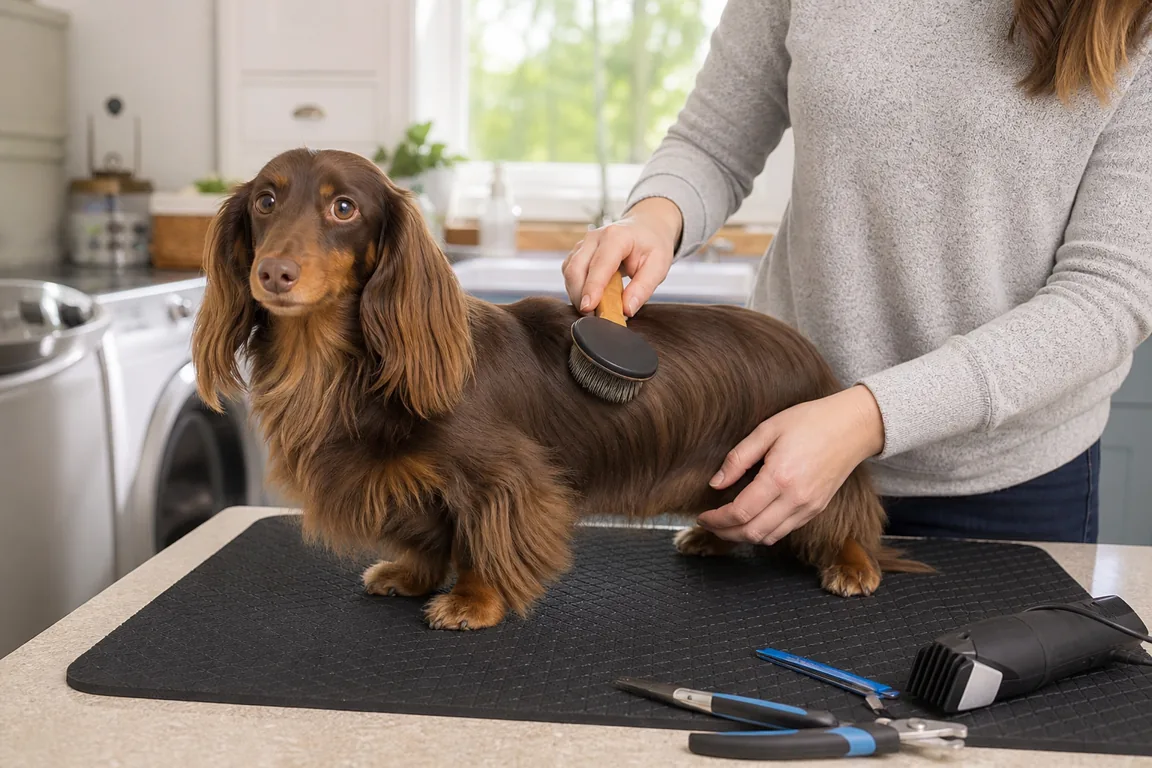
The best grooming tool is not the most powerful model. It is the tool matched to the coat, task and handler’s skill. A professional detachable-blade clipper can move through a dense prepared coat, but it can also heat a blade quickly and cut folded skin. A quiet consumer clipper may be easier for feet and sanitary trims, yet stall in a matted double coat. Brushes follow the same rule: the tool that removes loose undercoat from one dog can break the guard coat of another.
Quick recommendations
Light home trims and first-time users: a low-vibration consumer kit such as oneisall, with realistic limits
Everyday coat care: coat-specific slicker or pin brush plus a metal comb
Nails: sharp scissor-style clippers or a grinder the pet has been gradually conditioned to accept
| Tool | Strength | Trade-off | Best use |
|---|---|---|---|
| Andis AGC2 | Professional detachable blades, two speeds, corded continuous power | Heavy; blades need cooling and maintenance | Prepared thick coats and repeated full grooms |
| Wahl KM10 | Professional two-speed platform and broad blade compatibility | Still requires blade rotation, cleaning and trained handling | Serious home groomers and salon-style body work |
| oneisall consumer kits | Lower price, approachable guards and relatively low measured noise | Less suited to dense mats and long continuous sessions | Feet, face, sanitary areas and simple coats |
Andis AGC2 versus Wahl KM10
Both are corded, professional-style detachable-blade machines rather than lightweight human hair trimmers. That matters because animal coats vary in density and because professional blades allow the operator to choose a real cutting length instead of stacking fragile plastic guards over an underpowered cutter. Vetstreet includes the Andis AGC line among its premium home-grooming recommendations, while the Wahl KM10 product documentation describes a heavy-duty two-speed platform.
Neither is automatically “safe for beginners.” The cutting blade can become uncomfortably hot while the housing still feels normal. Touch the flat blade surface to the inside of your wrist every few minutes, keep clean spare blades ready, and stop rather than relying on cooling spray to mask a very hot blade. A dirty or poorly oiled blade pulls hair, increases friction and can produce a worse result than a cheaper, well-maintained clipper.
When a consumer clipper is the better buy
Independent testing by GearLab measured several home kits and found models such as oneisall practical for ordinary pet-owner use, with measured noise around the low-60-decibel range in its test. That does not make a consumer kit the best tool for a compacted poodle coat or severe matting. It makes it a less intimidating option for light trimming, paw pads and simple coats when the owner has modest expectations.
If a clipper slows, becomes hot, or needs repeated passes through one area, stop. Forcing it increases skin irritation and creates uneven cuts. Mats close to the skin hide folds, nipples and wounds; removing them is professional work, not a reason to buy a sharper machine.
Brushes: choose by coat mechanics
- Slicker brush: useful for curly and medium-to-long coats when used in small sections without scraping the skin.
- Pin brush: gentler for long flowing coats and routine maintenance, but not enough to confirm that tangles are gone.
- Metal comb: the final check. If the comb cannot pass from skin to tip, brushing is incomplete.
- Undercoat rake: useful during seasonal shedding on true double coats; the tooth length must reach the undercoat without dragging skin.
- Deshedding edge: use sparingly. Repeated aggressive passes can break healthy guard hairs and thin the coat unevenly.
Nails, ears and teeth are different jobs
For nails, sharp scissor-style clippers give a clean cut; a grinder removes smaller amounts and may be easier when the quick is difficult to see. Both require gradual conditioning and good lighting. Stop if the pet struggles strongly—restraint escalates fear and makes the next session harder. Ear canals should not be probed with cotton swabs, and hair should not be plucked routinely without veterinary or groomer guidance.
Grooming kits often include “dental” accessories, but cosmetic scraping is not dental care. The Veterinary Oral Health Council awards its seal only to products that demonstrate plaque or tartar efficacy, and AAHA recommends veterinary oral examination and appropriate home care. A grooming tool cannot treat disease below the gumline.
A safe home-grooming sequence
- Check the skin for redness, lumps, wounds, parasites and tight mats.
- Bathe only when appropriate, rinse thoroughly, then dry and brush the coat before clipping.
- Use a non-slip surface, bright light and a helper if the pet is calmly cooperative.
- Clip in short sessions, monitor blade temperature and reward pauses.
- Clean and oil blades after use; disinfect shared tools and allow them to dry fully.
When to stop and book a professional
Choose a groomer or veterinarian for severe matting, skin infection, painful joints, a history of biting, overgrown nails curling into pads, ear pain, or any lesion hidden beneath the coat. Sedation should only be planned by a veterinarian. “Finishing the haircut” is never more important than preventing fear, overheating or injury.
Final verdict
The Andis AGC2 and Wahl KM10 class are durable choices for owners who genuinely need full-body clipping and are willing to learn blade handling. A quieter consumer kit is the more sensible entry point for occasional tidy-ups. For most households, however, the highest-value purchase is a coat-appropriate brush plus a metal comb—and a relationship with a skilled groomer for the difficult work.
Start the conversation
Share an experience or a useful question. Please keep medical emergencies for your veterinarian.