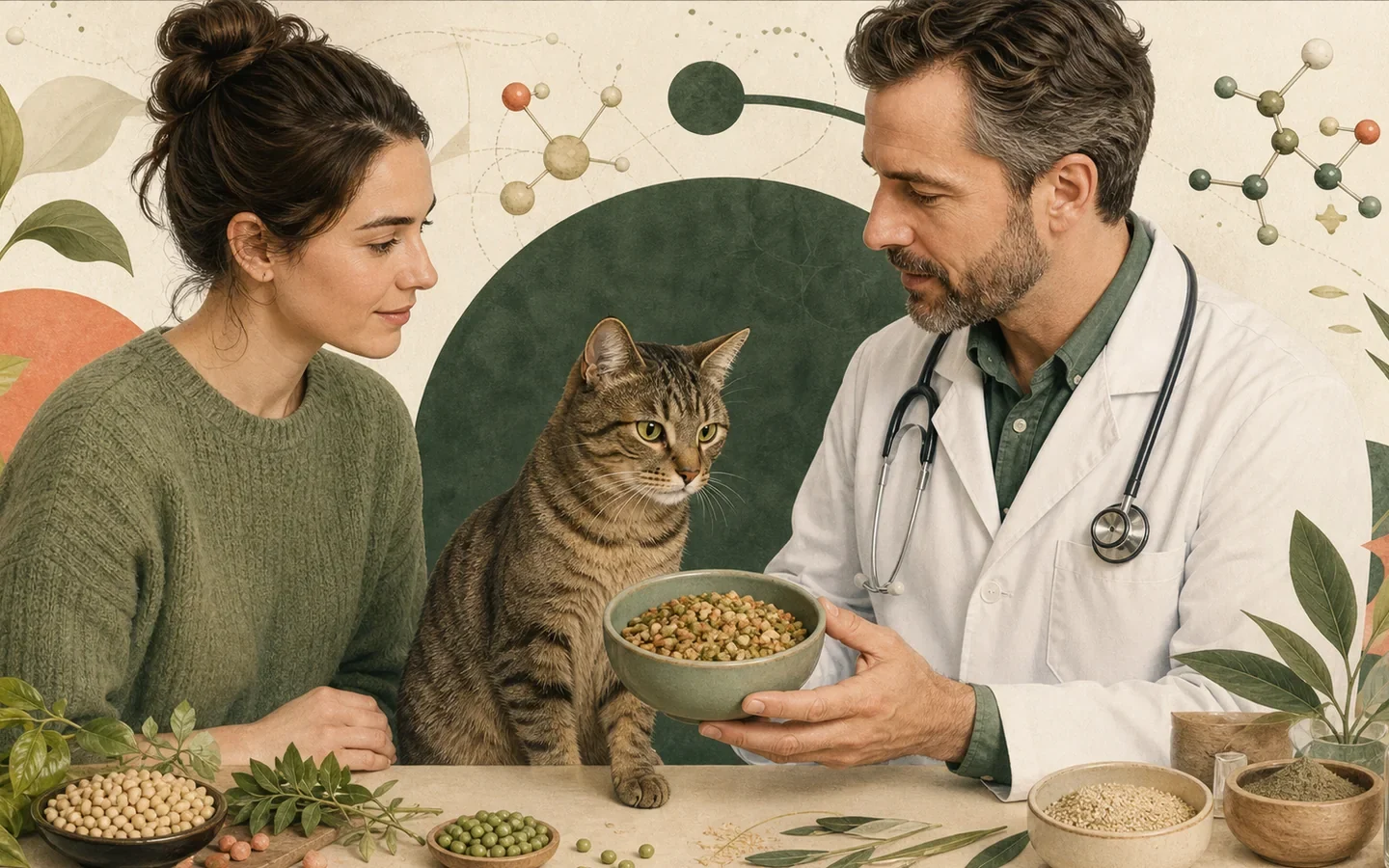
In 2019, a vegan influencer made headlines by claiming her cat thrived on a plant-based diet. The cat, she said, had been eating a custom-formulated vegan kibble for years and was perfectly healthy. The internet erupted. Veterinarians were horrified. And the underlying scientific question was buried under the controversy: can cats actually survive—and thrive—on a vegetarian or vegan diet? The answer, supported by decades of nutritional biochemistry, is a definitive no.
Obligate Carnivores: What That Actually Means
Cats are obligate carnivores, a classification that carries specific biochemical requirements. Unlike omnivores (dogs, humans) or herbivores (cows, rabbits), cats evolved to eat meat almost exclusively. Their ancestors, the African wildcat, consumed a diet of small mammals, birds, and reptiles with minimal plant matter. This evolutionary history shaped their digestive physiology in ways that make plant-based diets biologically incompatible.
The most critical difference is protein metabolism. Cats require significantly more protein than dogs—about 2.5 times as much on a per-body-weight basis. More importantly, they cannot down-regulate their protein metabolism when protein intake is low. Dogs can reduce protein turnover by up to 30% when fed low-protein diets. Cats cannot. This means that even a short-term protein deficiency causes muscle wasting, immune dysfunction, and organ damage in cats.
Nutrients That Only Exist in Animal Tissue
Taurine
Taurine is an amino acid that cats cannot synthesize in sufficient quantities. Dogs can synthesize taurine from other amino acids (methionine and cysteine). Cats lack the necessary enzymes. Taurine deficiency causes dilated cardiomyopathy, retinal degeneration leading to blindness, and reproductive failure. The only natural dietary sources are animal muscle tissue and organ meats. Plant-based taurine supplements exist, but their bioavailability in cats is questionable.
Vitamin A
Cats cannot convert beta-carotene (the plant precursor to vitamin A) into retinol (the active form). Dogs and humans can do this conversion efficiently. Cats must consume preformed vitamin A from animal liver. A vegetarian diet would provide beta-carotene, but cats would literally starve for vitamin A.
Arachidonic Acid
This essential fatty acid is required for inflammatory responses, blood clotting, and cell membrane structure. Cats cannot synthesize it from plant-based precursors (linoleic acid). Dogs can. Arachidonic acid is found exclusively in animal fats.
Niacin
Cats require 4-5 times more niacin than dogs. While niacin exists in some plant sources, the bioavailability is poor. A cat on a plant-based diet would develop niacin deficiency, causing anorexia, weight loss, and pellagra-like skin lesions.
What Happens When Cats Eat Vegetarian Diets
A 2021 study in the Journal of Veterinary Behavior documented the health outcomes of 55 cats fed vegetarian or vegan diets. The results were alarming. 34% showed signs of taurine deficiency, 18% had vitamin A deficiency, and 12% had developed urinary tract issues related to improper pH balance. Cats are also prone to urinary crystal formation when fed alkaline-forming plant-based diets; meat produces acidic urine that prevents struvite crystal formation.
Key Takeaways
- Cats are obligate carnivores and cannot down-regulate protein metabolism like dogs can
- Taurine, vitamin A, arachidonic acid, and niacin requirements can only be met by animal tissue
- 34% of cats on vegan diets in one study showed taurine deficiency signs
- Plant-based diets cause alkaline urine, promoting dangerous urinary crystal formation in cats
- Feeding a cat a vegetarian diet is not a lifestyle choice—it’s a nutritional emergency
2026 evidence update: physiology and formulation both matter
Cats require nutrients including taurine, arginine, preformed vitamin A, arachidonic acid and others in forms and amounts shaped by carnivorous metabolism. Plant-based commercial diets attempt to supply these through purified or synthetic nutrients, but available outcome evidence remains limited and product adequacy cannot be inferred from owner surveys.
Do not improvise a vegan or vegetarian cat diet. If ethical concerns are central, discuss a commercially complete product, independent nutrient analysis and veterinary monitoring rather than a homemade recipe.
Sources
Formulation matters more than a diet label
Cats require specific nutrients in usable amounts, including taurine, preformed vitamin A, arachidonic acid and an appropriate amino-acid profile. The central question is not whether individual plant ingredients can appear in cat food; it is whether the finished diet reliably meets feline requirements, remains digestible and is supported by quality control.
Home-formulated vegan or vegetarian recipes create a particularly narrow margin for error, and blood testing cannot prove that every nutrient has been adequate over time. Owners with ethical concerns should discuss goals openly with a veterinarian or board-certified veterinary nutritionist rather than improvising supplements. Monitor body weight, muscle condition, coat, appetite, stool and urinary health after any dietary change.
Start the conversation
Share an experience or a useful question. Please keep medical emergencies for your veterinarian.