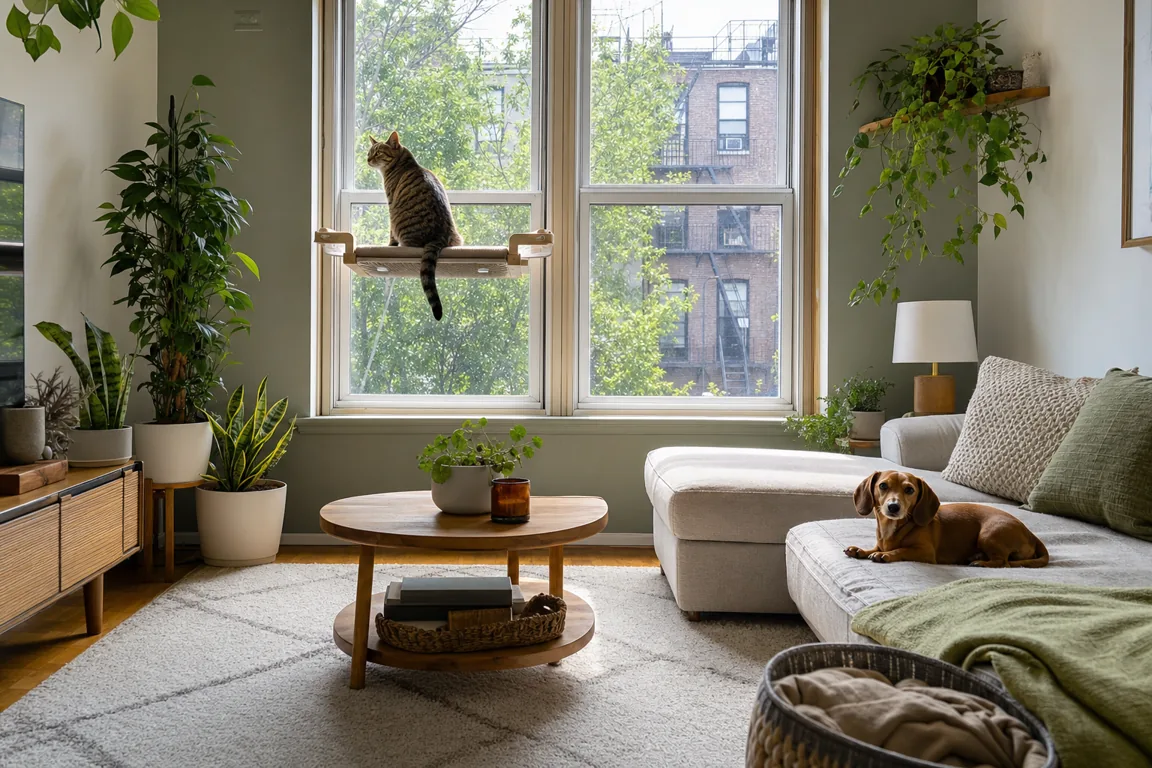
When I bought my first house, I decorated it like a Pinterest board. White rugs, glass coffee tables, exotic plants on every shelf. Then I brought home a Labrador puppy. Within a month, the white rug was stained, the coffee table had tooth marks, and the dieffenbachia plant was in the trash (it’s toxic to dogs). I realized that a pet-friendly home isn’t about sacrificing style—it’s about designing with both aesthetics and animal welfare in mind. After consulting with veterinarians and veterinary behaviorists, I’ve learned what actually matters when creating a home that works for both species.
Flooring: The Foundation of Pet Safety
Hard flooring is objectively better for pets than carpet. Carpet traps allergens, dander, and parasites. It absorbs urine and odors, and it provides poor traction for aging animals with arthritis. Hardwood floors, laminate, tile, and vinyl are all superior choices. However, they have different properties.
Hardwood is beautiful but prone to scratching. Oak and maple are more scratch-resistant than pine or bamboo. Prefinished hardwood with an aluminum oxide finish holds up better than site-finished floors. Tile and stone are virtually indestructible but can be cold and slippery. Adding area rugs with non-slip pads provides warmth and traction without the allergen accumulation of wall-to-wall carpet. Vinyl plank flooring (LVP) has become the preferred choice for pet owners—it’s waterproof, scratch-resistant, and provides better traction than tile.
A 2023 study in the Journal of Veterinary Behavior found that dogs with osteoarthritis showed significantly more confident movement on textured vinyl and rubber flooring compared to smooth tile. For senior pets, flooring choice is not decorative—it’s a mobility intervention.
Plants: Beauty That Won’t Kill Your Pet
The ASPCA Animal Poison Control Center receives over 200,000 calls annually about plant ingestion. Many common houseplants are toxic to pets, and the symptoms range from mild vomiting to cardiac failure. The most dangerous include lilies (all parts are toxic to cats, causing kidney failure), dieffenbachia (oral irritation and swelling), pothos (insoluble calcium oxalates causing severe burning), sago palms (liver failure), and azaleas (cardiovascular collapse).
Pet-safe alternatives are abundant and equally attractive. Spider plants, Boston ferns, African violets, orchids, and parlor palms are all non-toxic and easy to care for. The ASPCA maintains a searchable database of toxic and non-toxic plants. Before bringing any new plant into your home, check it. The 30 seconds of research could save a $3,000 emergency veterinary visit—or a pet’s life.
Vertical Space: Essential for Cats, Useful for Dogs
Cats are three-dimensional animals. In the wild, they climb trees to escape predators, survey territory, and rest. Indoor cats without vertical space are stressed cats. Cat trees, wall-mounted shelves, and window perches are not luxuries—they’re environmental necessities. A 2022 study found that cats with access to vertical territory showed 40% fewer stress-related behaviors (urine marking, aggression, overgrooming) than cats restricted to floor-level spaces.
For dogs, elevated beds and raised feeding stations can be beneficial. Elevated beds keep dogs off cold floors and reduce joint stress. Raised food bowls reduce neck strain, particularly for large breeds and senior dogs. The ideal height is at the level of the dog’s chest when standing.
Secure Storage and Toxic Substances
Every home contains substances that are toxic to pets: cleaning products, medications, chocolate, xylitol-containing gum, antifreeze, and rodenticides. Storage is not optional. Cleaning products should be in locked cabinets or on high shelves. Medications should be in child-proof containers in a drawer. Chocolate and xylitol should be in sealed containers. Antifreeze (which tastes sweet to pets) should be stored in a locked garage or shed. Rodenticides should never be used in homes with pets—consider snap traps or electronic rodent deterrents instead.
Key Takeaways
- Vinyl plank flooring (LVP) is the best flooring choice for pets—waterproof, scratch-resistant, and textured for traction
- Lilies, dieffenbachia, pothos, and sago palms are common houseplants that can kill pets
- Cats with vertical space (cat trees, shelves) show 40% fewer stress-related behaviors
- All medications, cleaning products, and toxic foods must be stored in locked or high cabinets
- Design for both species—your pet doesn’t care about aesthetics, but they care about safety and comfort
2026 evidence update: design for choice and predictable resources
Life-stage veterinary guidance treats environment and behavior as health issues. Cats need separated key resources, hiding and vertical options; dogs need traction, rest, safe access and outlets for movement, chewing and scent. A home is pet-friendly when the animal can choose distance, rest undisturbed, and reach food, water and toileting without conflict.
Start the conversation
Share an experience or a useful question. Please keep medical emergencies for your veterinarian.