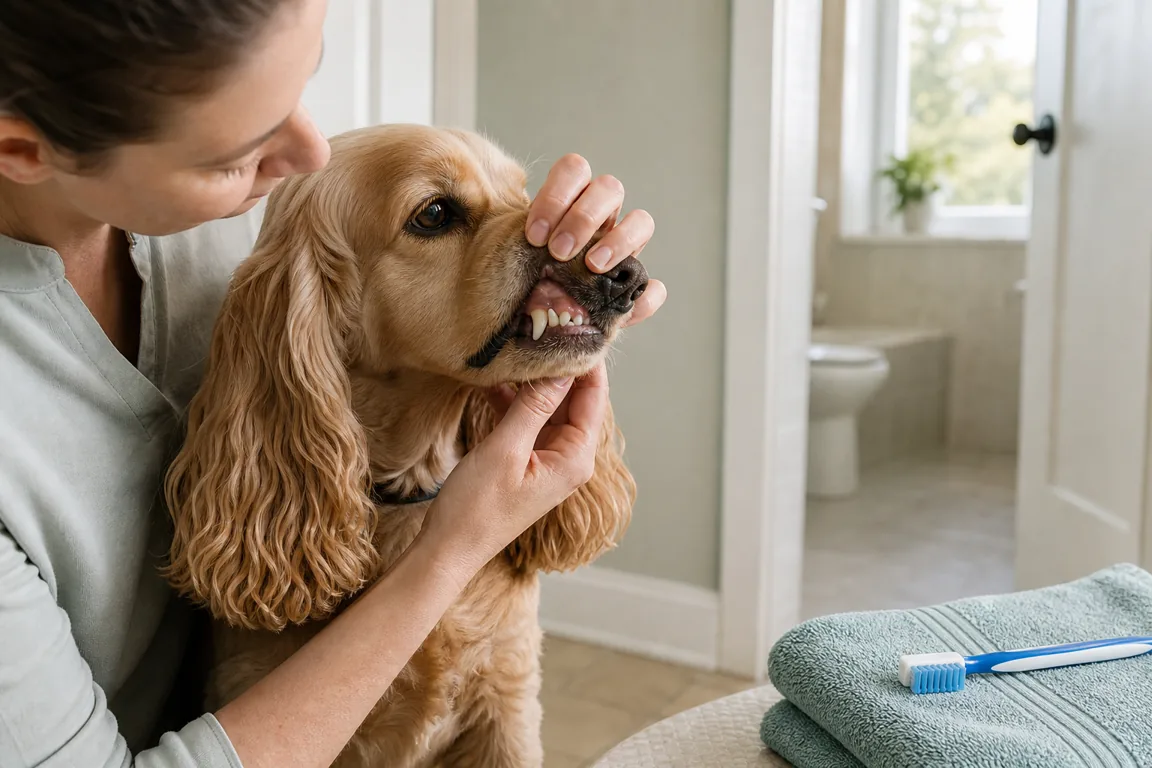
When I adopted my first dog, the shelter gave me a care package with food, a leash, and a pamphlet about vaccinations. What they didn’t mention—what nobody ever really mentions—is that dental disease is the most common preventable condition in companion animals. By age three, over 80% of dogs and cats have some degree of periodontal disease. And most owners don’t notice until their pet has difficulty eating, severe halitosis, or systemic complications. I’ve been guilty of this myself. Let me tell you why it’s so dangerous and what we can do about it.
The Scale of the Problem
According to the American Veterinary Dental Society, periodontal disease affects 80% of dogs and 70% of cats over age three. That’s not a typo. Four out of five dogs have gum disease. The American Animal Hospital Association (AAHA) has identified dental care as the most overlooked aspect of preventive veterinary medicine. The consequences are not cosmetic—dental disease can lead to tooth loss, jaw fractures, and systemic infections that damage the heart, kidneys, and liver.
A 2022 study in the Journal of Veterinary Dentistry found that untreated periodontal disease increases the risk of endocarditis (heart valve infection) by 400% in dogs. Another study documented that dogs with severe dental disease had elevated kidney biomarkers, suggesting chronic bacterial seeding from the oral cavity into the renal system. The mouth is not separate from the rest of the body.
What Dental Disease Actually Looks Like
Periodontal disease begins with plaque—a soft, sticky biofilm of bacteria that forms on teeth within hours of eating. If not removed, plaque mineralizes into tartar (calculus) within 48-72 hours. Tartar accumulation above the gumline is ugly but manageable. The real problem is tartar below the gumline, where it creates pockets of infection that progressively destroy the periodontal ligament and alveolar bone.
Stage 1 gingivitis involves red, swollen gums with no attachment loss. Stage 2 early periodontitis shows 50% attachment loss, loose teeth, and often bone destruction visible on radiographs. By the time owners notice bad breath, most dogs are already at Stage 2 or 3.
Prevention and Treatment
Professional Dental Cleaning
The gold standard is a professional cleaning under anesthesia. Non-anesthetic dental cleanings are controversial—the American Veterinary Dental College states that they cannot address subgingival disease and may create a false sense of security. A proper veterinary dental cleaning involves scaling (ultrasonic and hand), subgingival curettage, polishing, and radiographs. The procedure costs $300-$800 depending on the extent of disease and whether extractions are needed.
Home Care
The Veterinary Oral Health Council (VOHC) has approved specific products for plaque and tartar control. The single most effective home intervention is daily tooth brushing with enzymatic toothpaste. A 2023 study in the Journal of Veterinary Behavior found that dogs brushed daily had 80% less plaque accumulation than dogs receiving no home care. Dental chews and treats (VOHC-approved products like Greenies, C.E.T. chews, and VeggieDent) provide supplemental benefit but are not substitutes for brushing.
Diet
Dental prescription diets like Hill’s Prescription Diet t/d and Royal Canin Dental are formulated with larger kibble pieces that require chewing, which creates a mechanical scraping effect. These diets reduce tartar accumulation by approximately 30-40% compared to standard kibble. However, they work only on the teeth that chew—carnassial teeth and incisors often get minimal contact. They’re a useful adjunct, not a standalone solution.
Key Takeaways
- 80% of dogs and 70% of cats over age three have periodontal disease
- Untreated dental disease increases the risk of heart valve infection by 400%
- Professional cleaning under anesthesia is the gold standard; non-anesthetic cleanings are insufficient
- Daily tooth brushing reduces plaque accumulation by 80%—it’s the single most effective home intervention
- VOHC-approved dental chews and prescription diets provide supplemental benefit but are not substitutes
2026 evidence update: clean-looking crowns do not rule out disease
AAHA reports that most dogs and cats have some periodontal disease by age three. A conscious exam is useful, but a complete assessment requires anesthesia, probing and full-mouth dental radiographs because much of each tooth lies below the gumline. Non-anesthetic scaling removes visible calculus without diagnosing or treating subgingival disease.
Daily brushing is the most direct home-care method. When brushing is not feasible, choose products with a VOHC seal for the specific plaque or tartar claim.
Start the conversation
Share an experience or a useful question. Please keep medical emergencies for your veterinarian.