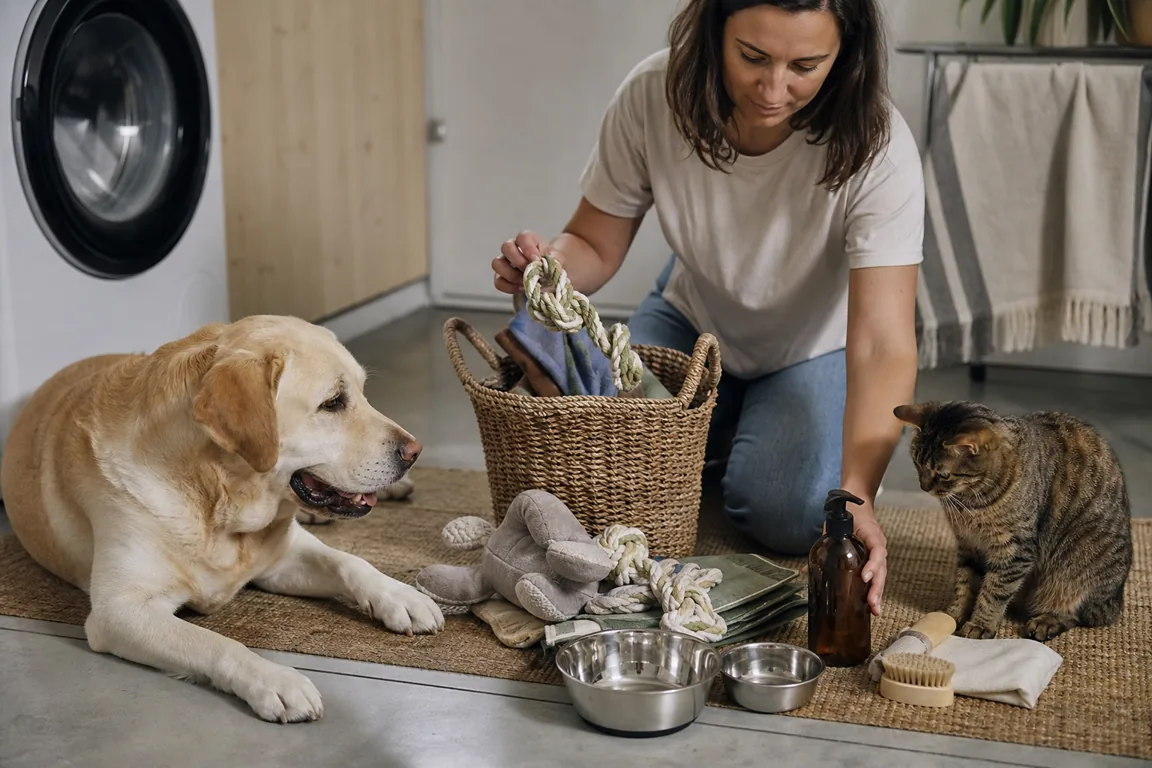
I remember the moment I realized my dogs were environmental disasters. I was standing in my garage, staring at a year’s worth of plastic poop bags, synthetic chew toys, and kibble bags that would take 500 years to decompose. My two dogs, wonderful as they are, had a carbon footprint that rivaled a small car. That realization started my journey into sustainable pet products, and it turns out I’m not alone. The eco-friendly pet care market is one of the fastest-growing segments in the entire industry.
The Scale of the Problem
Let’s start with the uncomfortable math. A single dog produces approximately 274 pounds of waste per year. If you’re using conventional plastic bags, that’s 1,000+ non-biodegradable bags per dog annually. Multiply by 90 million U.S. dogs, and you’re looking at billions of plastic bags that will outlast the pets they served.
Pet food packaging is another major issue. The multi-layer plastic bags used for dry kibble are nearly impossible to recycle because they’re made of mixed materials (plastic, aluminum, and paper). A 2023 study by the Recycling Partnership found that only 2% of pet food packaging is recycled. The rest ends up in landfills or oceans.
Then there’s the protein source. Conventional pet food relies heavily on beef and chicken by-products, which carry significant environmental costs. Beef production requires 1,800 gallons of water per pound and generates substantial methane emissions. When you consider that pets consume about 20% of the meat produced in the U.S., the environmental impact becomes undeniable.
Innovation in Sustainable Pet Products
Biodegradable and Compostable Waste Solutions
Companies like BioBag and Pogi’s Pet Supplies have developed poop bags made from cornstarch and plant-based materials that decompose in 90-180 days in composting facilities. Unlike “biodegradable” plastic bags (which often just break into microplastics), these are certified compostable by BPI and TÜV Austria.
More radically, some companies like Doggie Dooley sell in-ground waste digesters that function like miniature septic tanks for pet waste. They use natural enzymes and bacteria to break down waste into harmless liquid that drains into the soil. The upfront cost is $50-$100, but they eliminate the need for bags entirely.
Insect Protein and Alternative Diets
Perhaps the most promising sustainability innovation is insect protein. Companies like Jiminy’s, Wilder Harrier, and Chippin are producing pet foods with black soldier fly larvae or cricket protein. Insects require 12x less feed, 2,000x less water, and produce 100x fewer greenhouse gas emissions per pound of protein compared to beef.
These aren’t fringe products anymore. Mars Petcare invested in insect protein startup Protix in 2019, and Nestlé Purina launched a line of insect-based dog food in Europe in 2023. The nutritional profile is excellent—black soldier fly larvae contain 42% protein, 35% fat, and all essential amino acids.
Recycled and Upcycled Materials
Pet toys made from recycled ocean plastic, reclaimed rope, and upcycled fabric are increasingly mainstream. West Paw Design manufactures toys from recycled ocean-bound plastic, and their “Zogoflex” material is infinitely recyclable through their closed-loop program. Cycle Dog uses recycled bicycle inner tubes to create durable, waterproof toys and beds.
Key Takeaways
- U.S. pets generate billions of non-biodegradable waste bags annually
- Only 2% of pet food packaging is recycled; multi-layer bags are nearly impossible to process
- Insect protein requires 12x less feed and 2,000x less water than beef protein
- Certified compostable bags and in-ground waste digesters are viable alternatives to plastic
- Major pet food companies are investing in sustainable protein sources—this is going mainstream
A practical sustainability test
The lowest-impact product is often the one that fits, is accepted, lasts and can be cleaned or repaired. Evaluate the exact claim: recycled content, recyclability, compostability and carbon neutrality describe different boundaries. Local waste infrastructure matters, and hygiene and nutritional completeness remain non-negotiable.
Sources
Ask for the boundary behind every green claim
“Recycled,” “recyclable,” “compostable” and “carbon neutral” describe different things. Look for the percentage of recycled material, the part of the product it applies to, the composting conditions, and whether local collection accepts the finished item. A technically recyclable multilayer pouch may still go to landfill where no suitable program exists.
For durable goods, check spare-part availability, cleaning instructions, warranty and consumable lock-in. A fountain with a replaceable pump or a bed with a washable cover can remain useful longer than a superficially greener item that cannot be repaired. Nutrition, hygiene and animal safety remain the first constraints; environmental improvement should work within them.
Start the conversation
Share an experience or a useful question. Please keep medical emergencies for your veterinarian.